The quick answer
Verify the legal entity and bank details, write measurable acceptance criteria and request a representative lot sample. Confirm destination requirements, payment, transport and receiving inspection before committing.
Start with the application, not a photograph
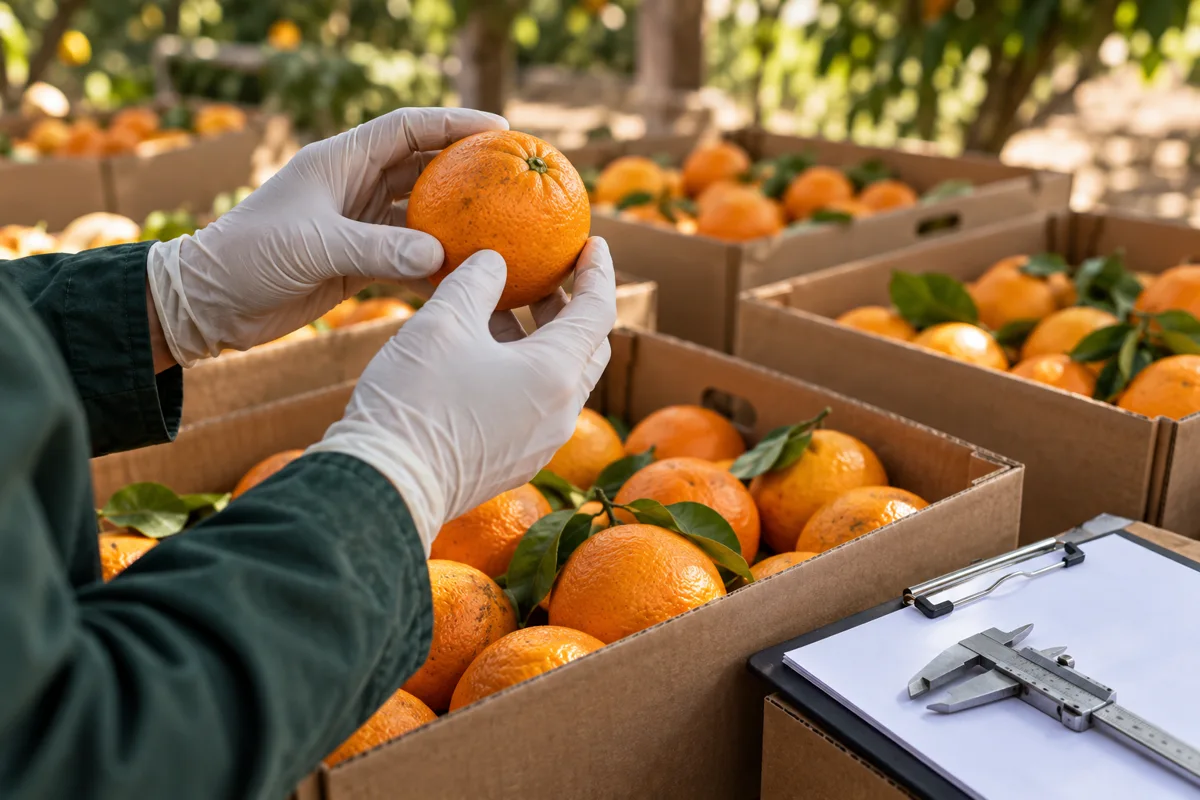
Before looking for the lowest price, identify the application: fresh retail, juice or a manufacturing line. A grade acceptable for processing may not suit a store shelf. Write down the commodity, essential variety, net quantity, destination and delivery window. Identify defects that affect the application: internal damage, uneven size, cracking or clumping in frozen products. Premium is not a specification. A photograph helps explain appearance but does not establish taste, firmness or test results. If your buyer has an existing specification, share it before pricing so suppliers quote against the same brief.
Verify the party you will contract with
Request the legal name, registration details and a contact channel you can verify. Match the names on the quotation, invoice and bank account; clarify discrepancies before transferring funds. If banking instructions change, verify them independently using a previously known contact number. An email alone is insufficient evidence. Ask who packs the product, who invoices it and who handles claims, particularly where intermediaries are involved. Independent inspection can provide additional lot evidence where appropriate. The goal is not to collect a large stack of files but to make sure every document answers a specific question about the contracting party or order.
Connect the sample to the specification and lot
An attractive sample from another variety does not test your order. Agree the lot reference, sampling method, packing date and storage history, then record what you will inspect. A factory should trial the sample under its actual production conditions rather than rely on a quick tasting. Record measurements and photographs and retain the accepted specification. If the offered lot changes after approval, ask whether new inspection is necessary. Agree sample charges, freight and arrival timing before dispatch; neither a sample programme nor a catalogue automatically proves current inventory.
Complete the quotation before confirmation
Check the currency, pricing unit, net pack weight, quantity and agreed tolerances. Name the delivery point and specify the scope of freight, insurance and clearance costs and when responsibility transfers under your agreement. Review import requirements with your broker before booking: commodity, country and transport mode can change the documents required. Agree quotation validity, payment milestones, expected dispatch and how delays will be handled. A lower offer deserves closer comparison: gross weight is not net weight, and a farm-gate price is not equivalent to one that includes transport.
Plan receiving inspection before arrival
Assign the receiving person, unloading location, storage capacity and inspection time. On arrival record lot references, seal condition, packaging, weights and temperature under the agreed plan. Separate disputed packs and preserve photos, readings and transport documents instead of quickly using or discarding the evidence. Report discrepancies within the notification period and method written into the contract. Afterwards review the experience: was the specification appropriate, and was information missing? A better second order starts with documented learning from the first rather than repeating the same assumptions.